Mechanical treatment
Wet combing for head lice
How wet combing works as a careful check and removal method, when public guidance still pairs it with medicine, and how to build a repeatable combing session.
Wet combing for lice is a deliberate method, not a quick look through damp hair. The hair is wetted, a slippery film helps the comb move, and small sections are combed from the scalp to the ends with a fine-tooth louse comb. After every pass, the parent wipes the comb and inspects what came off. That repeated wipe-and-check step turns combing into both a search and a mechanical removal process.
The method can play two roles. It may help confirm that live lice are present, and it can remove lice and some eggs. It can also be used after a lice medicine, when its timing does not conflict with the product label. Wet combing is careful work. It is not a shortcut past label directions when medicine is chosen.
Start by confirming what is in the hair
Itching alone does not prove an infestation. Dandruff, hair casts, scabs, and product residue can all be mistaken for eggs. The CDC overview of head lice says the best diagnosis is finding a live nymph or adult. A fine-toothed louse comb can help find one. Nits attached within about one-quarter inch of the scalp deserve attention, but a nit farther down the hair may be old or already hatched.
Seat the child under bright light and look especially behind the ears and near the neckline. Move slowly enough to inspect the scalp, comb teeth, and wiping surface. If nothing moves and the material slides off easily, pause before treating. Misdiagnosis is common, and a clinician can confirm an uncertain finding.
How a complete comb-out works
The American Academy of Pediatrics HealthyChildren comb-out instructions describe a practical sequence: wet the hair, work in small sections with a fine-tooth comb, wipe the comb on a wet paper towel, and examine the scalp, comb, and towel. Continue until every section has been covered. The page presents combing as useful for checking and removal, while cautioning that it usually does not work as the only treatment.
Begin with detangled hair and enough clips to keep finished sections apart. Water provides a film; conditioner is often used during a comb-only session to improve slip. Place the comb teeth close to the scalp without scraping, then draw the comb through to the ends in one controlled pass. Wipe both sides of the comb on a white damp towel and look for moving lice before the next pass. Rinse or clean the teeth when debris collects.
Combing alone and combing after medicine are different plans
The AAP’s 2022 clinical report on head lice says manual removal by wet combing can be used when a caregiver cannot afford or does not wish to use a pediculicide. It requires careful technique over at least roughly three weeks, which covers one louse life cycle. The report also explains that removing nits after a pediculicide is optional for preventing spread, though it may reduce confusion and stigma. Combing after treatment is often easiest when the hair is wet.
That does not mean the two plans can be mixed at any moment. The CDC treatment instructions say not to use conditioner or a combination shampoo and conditioner before applying lice medicine, and not to wash the hair again for one to two days after removing the medicine. Follow the exact label for the selected product. Schedule any lubricated wet-combing session around those directions rather than creating a homemade product stack.
After medicine, the CDC recommends using a fine comb to remove dead or remaining live lice and a nit comb to remove lice and nits from the hair shaft. It advises checking and removing lice and nits every two to three days for two to three weeks after each treatment. Whether retreatment is needed, and when, depends on the medicine. The package directions and advice from a pharmacist or clinician control that decision.
A worked session a parent can repeat
Consider a Saturday morning session for shoulder-length hair. Set aside an unrushed block of time. Gather a fine-tooth louse comb, ordinary detangling comb, hair clips, bowl of water, white paper towels, good lamp, and a phone or notebook. If this is a comb-only plan, prepare the chosen water or conditioner film. If medicine was used, first confirm that wetting or conditioning now fits its label.
- Record the starting point. Write the date, whether medicine was used and when, and whether a live moving louse has already been seen.
- Wet and divide the hair. Detangle gently. Make four broad zones, then take a narrow section from one zone. Clip untouched and completed hair separately.
- Comb each section fully. Start close to the scalp and pull to the ends. Wipe the comb on a damp white towel after every pass. Repeat until that section produces no lice or obvious attached material.
- Inspect and log findings. Record live lice separately from suspected nits or debris. “Two moving lice, left neckline” is more useful than “still bad.” A quick photo can help a clinician assess an uncertain specimen.
- Clean up and book the next check. Finish every section. Wash hands and clean the workspace. Put checks on the calendar every two to three days for the next two to three weeks when following post-treatment CDC guidance.
A sample calendar might use Saturday as day 0, followed by checks on Tuesday, Friday, Monday, Thursday, and Sunday, continuing through the recommended window. A comb-only plan needs the sustained multi-week technique described by the AAP. A medicine plan must also preserve any repeat-application date on the label. The notes should show the date, live lice found, sections completed, scalp concerns, and any product used.
Keep the household response measured
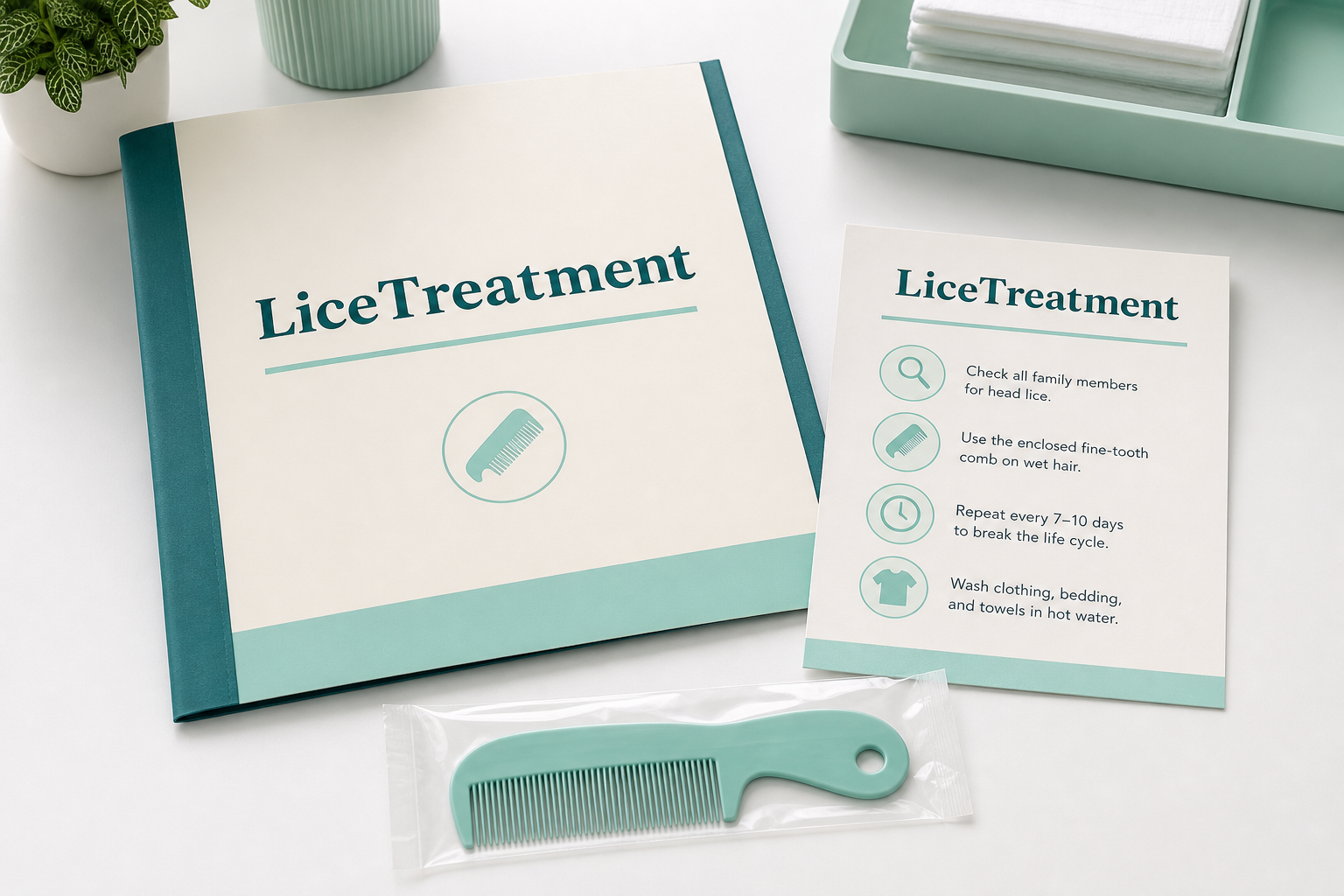
Check other household members, especially anyone who shares a bed, and treat people according to current public guidance rather than automatically treating everyone. The CDC’s guidance for caring for someone with lice covers household checks, nonprescription and prescription choices, and when to ask a doctor, pharmacist, or health department. The CDC does not recommend a specific product. It also says a child may return to school after appropriate treatment begins, subject to the school’s local policy.
Clean the tools between users. CDC treatment guidance says combs and brushes can be soaked in water at least 130°F for five to ten minutes. Launder suitable clothing, towels, and bedding used during the two days before treatment, and vacuum places where the affected person sat or lay. Lice spread mainly through hair-to-hair contact. Fumigant sprays and fogs are unnecessary and can be toxic, so the house does not need a pesticide campaign.
When combing needs professional input
Ask a clinician or pharmacist when the diagnosis is uncertain, a child is very young, pregnancy or breastfeeding affects a treatment choice, or the scalp has spreading redness, drainage, sores, or other signs of infection. Get help if live lice persist after a correctly completed treatment course instead of repeatedly applying or combining products. The Mayo Clinic diagnosis and treatment overview can help frame confirmation, treatment options, and follow-up questions for that conversation.
Wet combing works best as a defined routine: confirm, section, pass, wipe, inspect, record, and repeat. Its value comes from careful technique and a schedule, not force or speed. When medicine is part of the plan, its label remains the guide. This article provides general information, not medical advice.

Michael Santiago develops premium domain names and the companies behind them through OnlineBusiness.com. He founded i-newswire.com in 2007, later iNewswire.com, and helped build Newswire.com. The business sold in 2022 for $44 million. Brand, PR, and SEO work now runs through GoPR.com, with Signage.com as a live category case.